
Glaucoma Treatment
Glaucoma is a group of eye conditions that damage the optic nerve, which carries visual signals from the eye to the brain. It is often linked to raised pressure inside the eye. In most cases it develops slowly and without pain, so many people do not notice it until some vision has already been lost.
At Shree Hanumant Vision Care (SHVC), Sundarpur, Varanasi, patients can get a detailed glaucoma evaluation, including eye pressure measurement and optic nerve assessment. Our focus is on early detection, regular monitoring and a treatment plan that helps protect your remaining vision for the long term.
What Is Glaucoma?
The eye continuously produces a clear fluid called aqueous humour, which nourishes the front part of the eye. This fluid normally drains out through a tiny drainage area called the drainage angle. When drainage slows down or gets blocked, fluid builds up and the pressure inside the eye (intraocular pressure) can rise.
Over time, high eye pressure can damage the optic nerve. Side vision is usually affected first, and central vision is affected later as the condition progresses. In some people, the optic nerve gets damaged even when eye pressure is within the normal range.
Vision lost to glaucoma cannot be restored. With early diagnosis and regular treatment, though, further damage can often be slowed or prevented. That is why glaucoma is called the “silent thief of sight”, and why routine eye check-ups matter, especially after the age of 40.
Common Symptoms of Glaucoma
Symptoms depend on the type of glaucoma. The most common type usually causes no symptoms in the early stages. Many patients find out they have glaucoma only during a routine eye examination.
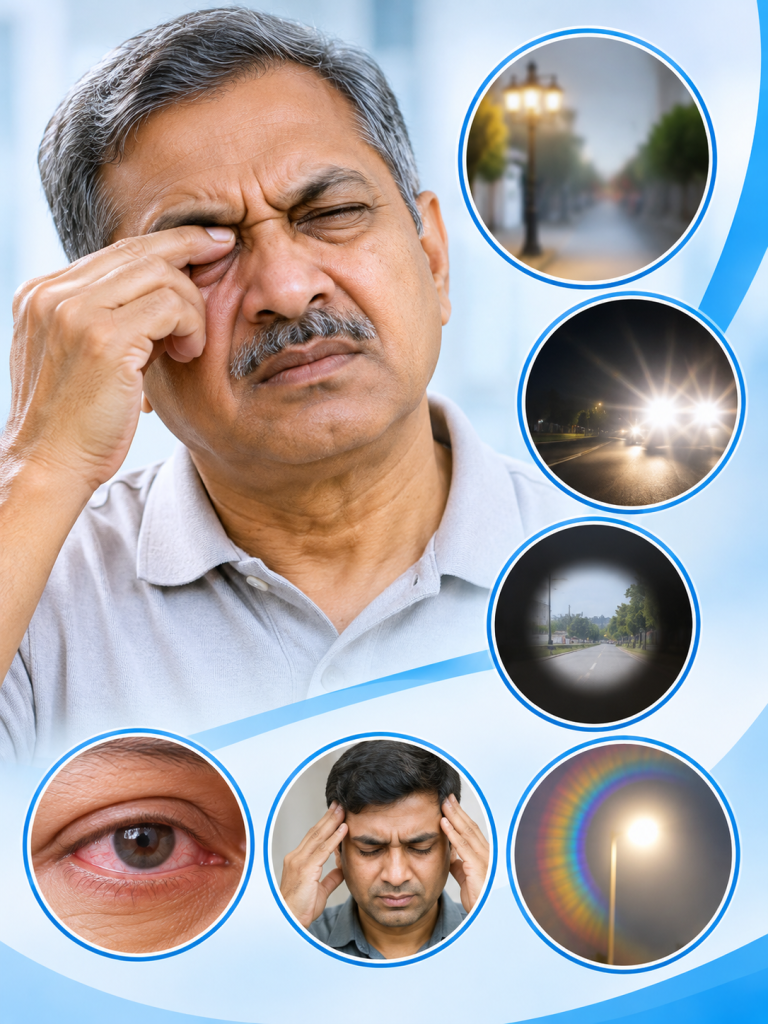
Common symptoms include:
- Gradual loss of side (peripheral) vision
- Patchy blind spots in vision
- Tunnel vision in advanced stages
- Frequent change in spectacle power
- Difficulty seeing in dim light
- Coloured halos or rainbow rings around lights
- Blurred or hazy vision
- Eye pain or heaviness, sometimes with headache
- Sudden severe eye pain, redness, nausea or vomiting (in acute attacks)
Sudden severe eye pain with redness, blurred vision, headache or vomiting can be a sign of an acute glaucoma attack. Seek immediate medical attention.
Types of Glaucoma
Glaucoma can develop in different ways depending on how the eye’s drainage system is affected. Some commonly recognised types include
Open-Angle Glaucoma
This is the most common type. The drainage angle stays open but works less efficiently over time, so eye pressure rises slowly. It usually causes no pain or early symptoms.
Angle-Closure Glaucoma
The drainage angle becomes narrow or blocked by the iris. A sudden blockage can cause an acute attack with severe pain and blurred vision, which needs urgent treatment.
Normal-Tension Glaucoma
Optic nerve damage and vision loss occur even though eye pressure is within the normal range. Regular optic nerve and visual field checks are important to detect it.
Secondary Glaucoma
This type develops because of another cause, such as eye injury, inflammation, diabetes-related eye changes, an advanced cataract or long-term steroid use
Congenital / Childhood Glaucoma
A rare condition present at birth or in early childhood because of abnormal development of the drainage system. Signs may include large, cloudy or watery eyes and light sensitivity.
Glaucoma Suspect
Some people have higher-than-normal eye pressure or optic nerve changes but no confirmed damage yet. They need regular monitoring to catch any early signs of glaucoma.
Causes and Risk Factors of Glaucoma
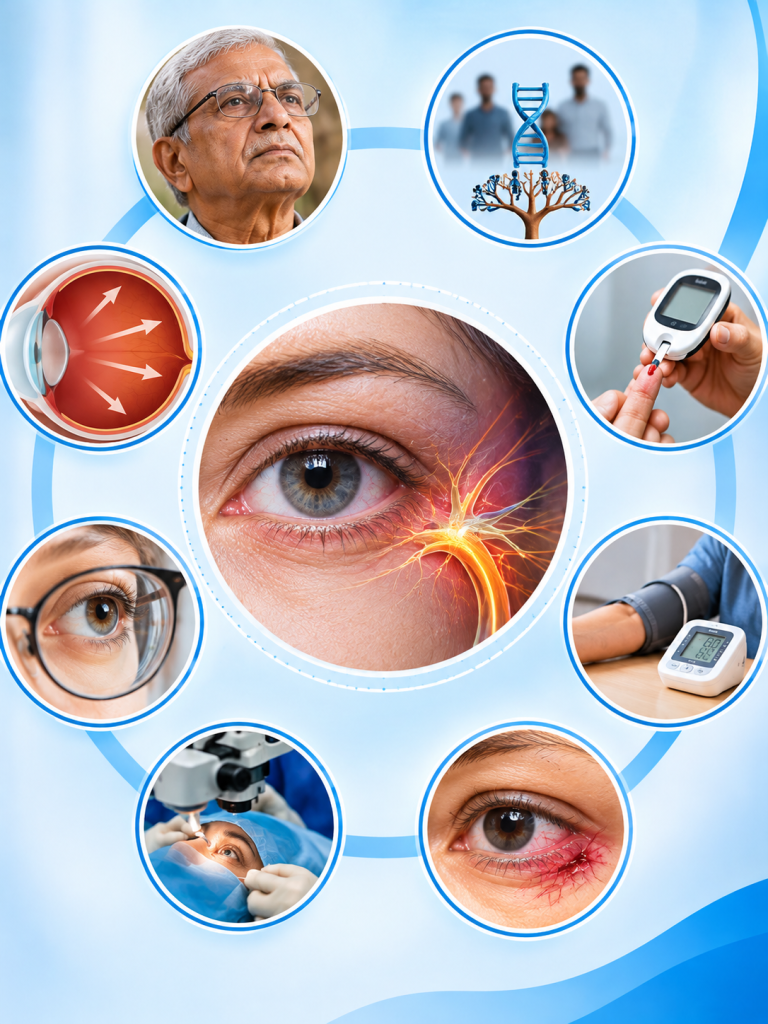
Glaucoma most often develops when the fluid inside the eye does not drain properly and eye pressure increases. The exact cause is not always known, but certain factors raise the risk of developing it. People with one or more risk factors are advised to get their eyes checked regularly.
Common causes and risk factors include:
. Age Above 40: The risk of glaucoma increases with age, so regular eye check-ups become more important after 40.
. Family History: Having a parent, brother or sister with glaucoma significantly increases your risk.
. High Eye Pressure: Raised intraocular pressure is the most important known risk factor for optic nerve damage.
. Diabetes and High Blood Pressure: These conditions can affect the blood supply to the optic nerve and are linked with a higher glaucoma risk.
. High Spectacle Power: People with high minus (myopia) or high plus (hypermetropia) power may be at greater risk of certain types of glaucoma.
. Long-Term Steroid Use: Prolonged use of steroid eye drops, tablets or inhalers without medical supervision can raise eye pressure.
. Eye Injury or Surgery: A past injury or certain eye conditions can damage the drainage system and lead to secondary glaucoma.
Glaucoma Treatment Options
How is glaucoma treated?
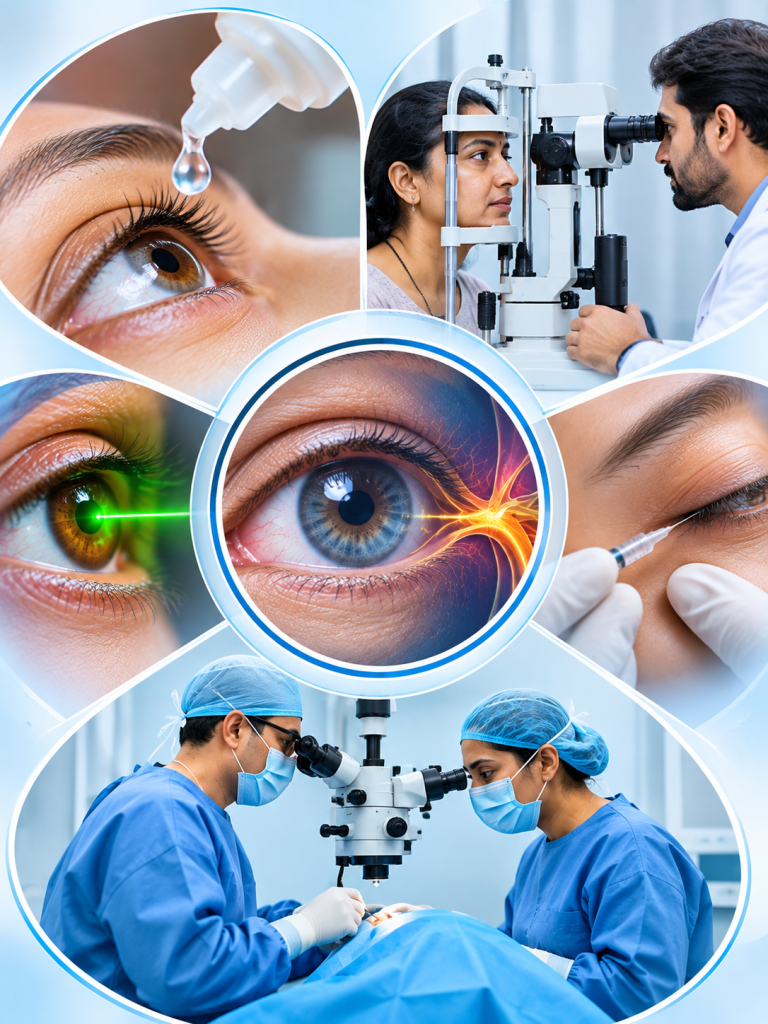
The aim of glaucoma treatment is to lower eye pressure and protect the optic nerve from further damage. Based on the type and stage of glaucoma, the eye specialist may recommend:
- Prescription eye drops to reduce fluid production or improve drainage
- Oral medicines in certain situations, for short-term pressure control
- Laser treatment, such as laser iridotomy for narrow angles or trabeculoplasty for open-angle glaucoma
- Glaucoma surgery, such as trabeculectomy, when medicines or laser are not enough
- Cataract surgery in selected cases, where it may help improve drainage
- Regular follow-ups with eye pressure, optic nerve and visual field checks
- Guidance on using eye drops correctly and consistently
Glaucoma usually needs lifelong care. Never stop or change your glaucoma medicines without consulting your eye specialist. Regular follow-ups play a key role in protecting your vision.
How Is Glaucoma Diagnosed?
A complete eye examination is the most reliable way to detect glaucoma. Checking eye pressure alone is not enough. Depending on your symptoms and risk factors, an ophthalmologist may recommend the following tests:
- Tonometry (Eye Pressure Test): This test measures the pressure inside the eye. It is a quick, simple and painless procedure.
- Gonioscopy: A special lens is used to examine the drainage angle of the eye and check whether it is open, narrow or closed.
- Optic Nerve Examination: After dilating the pupil, the doctor examines the optic nerve for signs of glaucoma-related damage.
- Visual Field Test (Perimetry): This test checks your side vision and helps detect blind spots caused by glaucoma.
- OCT and Pachymetry: OCT scans measure the thickness of the optic nerve fibre layer, and pachymetry measures corneal thickness. Both help in diagnosis and monitoring. The tests recommended depend on each patient’s condition and examination findings.