
Cornea Treatment

The cornea is the transparent front layer of the eye that plays an important role in focusing light and maintaining clear vision. Damage, infection or changes in its shape can affect eyesight and cause discomfort.
At Shree Hanumant Vision Care (SHVC), Sundarpur, Varanasi, patients can receive eye examinations and medical guidance for various corneal conditions. Our approach focuses on identifying the underlying problem and recommending suitable treatment based on individual eye health.
What Is the Cornea?
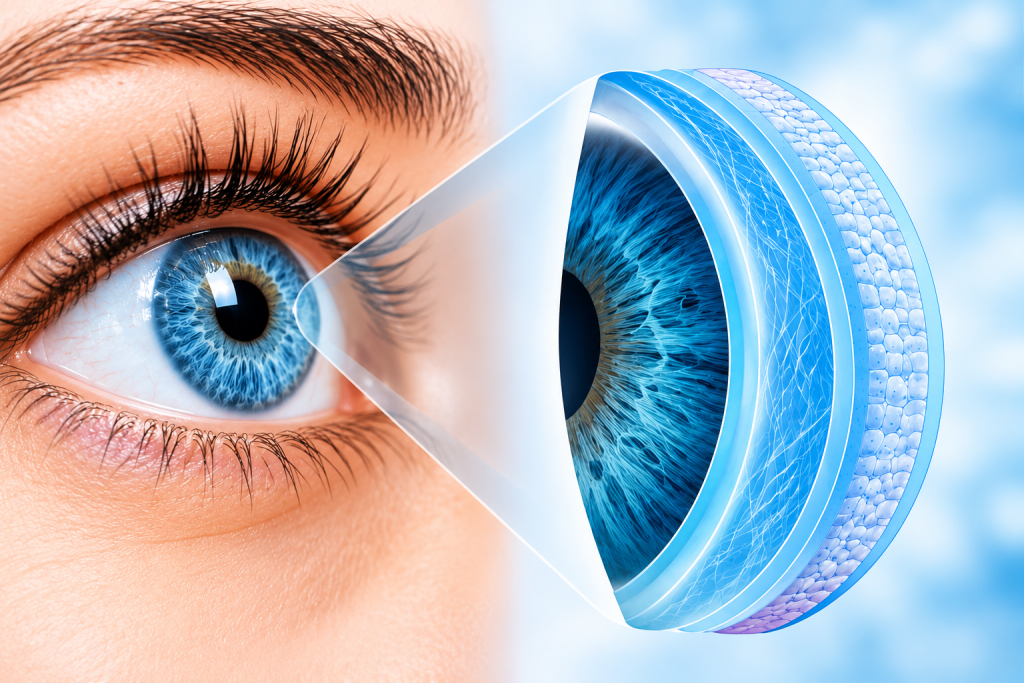
The cornea is the clear, dome-shaped outer surface of the eye that covers the iris and pupil. It helps protect the eye from dust, germs and other external particles while allowing light to enter and focus properly.
The cornea consists of five main layers: epithelium, Bowman’s layer, stroma, Descemet’s membrane and endothelium. Each layer performs an important function in maintaining the strength, transparency and normal functioning of the cornea.
When the cornea becomes damaged, infected or cloudy, it can interfere with normal vision. Early examination helps identify corneal problems and determine appropriate treatment.
Common Symptoms of Corneal Diseases
Corneal conditions can cause different symptoms depending on their type and severity. Some problems may initially cause mild irritation, while others can affect vision significantly.
Common symptoms include:
- Blurred or cloudy vision
- Eye redness and irritation
- Pain or discomfort in the eyes
- Excessive watering or tearing
- Sensitivity to sunlight and bright lights
- Feeling of something stuck inside the eye
- Difficulty seeing clearly at night
- Distorted vision or glare around lights
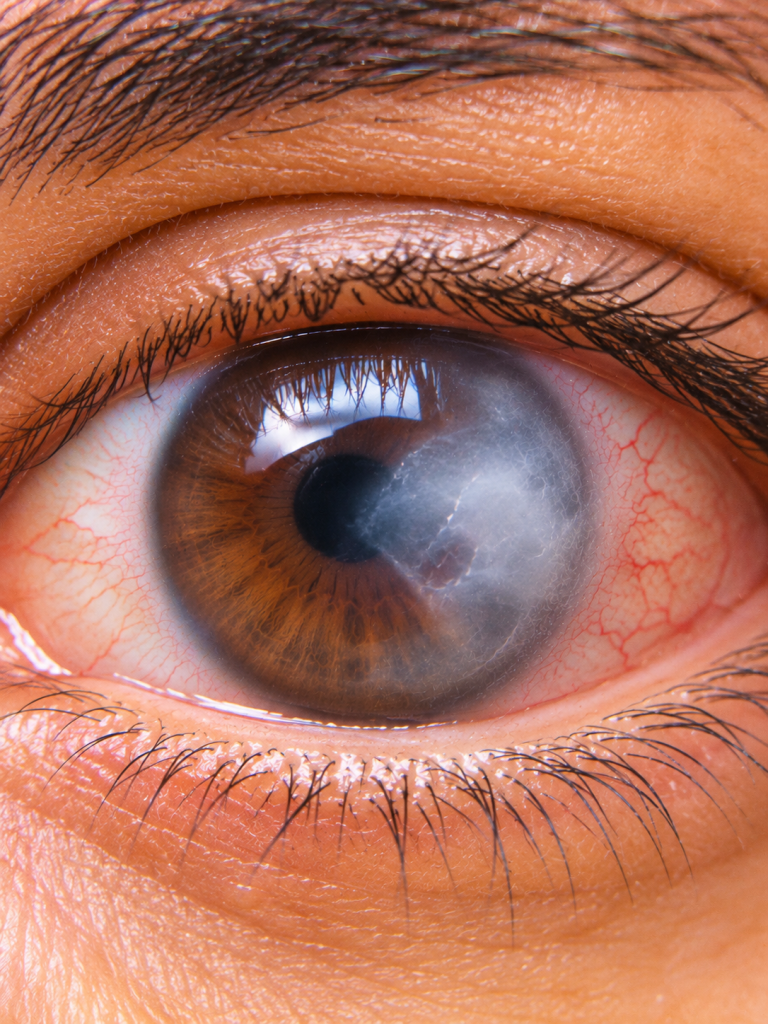
- White or cloudy spots on the cornea
If you experience persistent eye discomfort or sudden changes in vision, consult an eye specialist for proper evaluation.
Types of Corneal Diseases
Different corneal conditions can affect the structure and transparency of the eye. Some commonly recognised conditions include:
Corneal Ulcer
A corneal ulcer is an open sore on the cornea, usually caused by an infection. It may cause pain, redness, watering and blurred vision.
Keratitis
Keratitis refers to inflammation of the cornea. It may occur due to bacterial, viral or fungal infections, injuries or contact lens-related problems.
Keratoconus
Keratoconus is a progressive condition in which the cornea becomes thinner and gradually develops a cone-like shape. It can cause blurred and distorted vision.
Corneal Opacity
Corneal opacity occurs when the normally transparent cornea becomes cloudy due to scarring, infection or injury, affecting visual clarity.
Corneal Dystrophy
Corneal dystrophy is a group of inherited disorders that cause abnormal deposits or changes in the different layers of the cornea.
Corneal Abrasion
A corneal abrasion is a scratch or injury to the outer surface of the cornea. It can cause pain, irritation, watering and sensitivity to light.
Causes and Risk Factors of Corneal Diseases
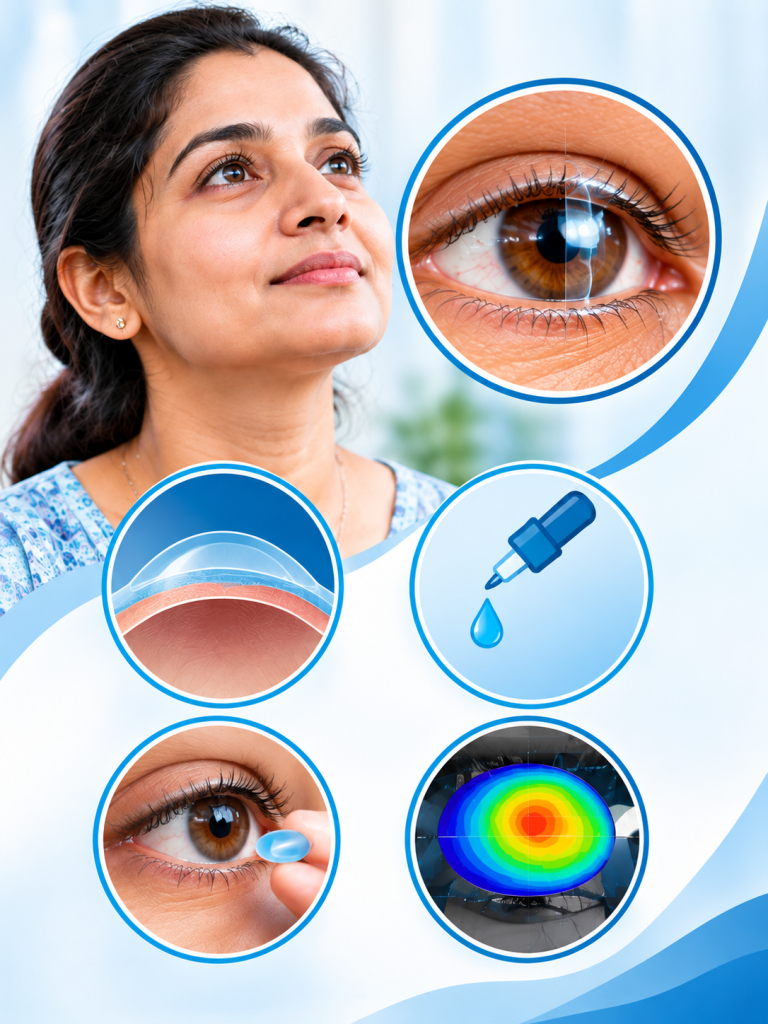
Corneal diseases can develop due to various factors that affect the structure, transparency and overall health of the cornea. Infections, eye injuries, genetic conditions and improper contact lens use are some of the common causes of corneal problems. Certain lifestyle habits and underlying eye conditions may also increase the risk of corneal damage.
Common causes and risk factors include
. Eye Infections: Bacterial, viral, fungal and parasitic infections can affect the cornea and cause inflammation, ulcers or damage.
. Eye Injuries: Scratches, foreign particles, accidental injuries and chemical exposure can damage the corneal surface.
. Improper Contact Lens Use: Poor contact lens hygiene, wearing lenses overnight and using contaminated lenses can increase the risk of corneal infections.
. Genetic Factors: Inherited conditions such as keratoconus and corneal dystrophies can affect corneal shape, thickness and transparency.
. Excessive Eye Rubbing: Frequent or aggressive eye rubbing may contribute to corneal damage and worsen conditions such as keratoconus.
. Severe Dry Eyes: Reduced tear production or poor tear quality can affect the corneal surface and increase the risk of irritation and damage.
. Chemical Exposure: Contact with harmful chemicals can cause serious corneal injuries and requires immediate medical attention.
Symptoms and Causes
What are the symptoms of corneal disease?
Symptoms vary based on the specific condition and may include:
- Eye pain, which can range from mild to severe.
- Sensitivity to light.
- The sensation that something is in your eye.
- Blurry vision.
- Vision that gets worse over time.
- Red or bloodshot eyes.
- Watery eyes.
- Pus or discharge from your eyes.
These symptoms can point to many possible conditions. And some conditions have no symptoms, especially early on. That’s why it’s important to see an eye care specialist if you experience these issues.
How Are Corneal Diseases Diagnosed?
An eye examination is important for identifying the type and severity of a corneal condition. An ophthalmologist may recommend different diagnostic tests depending on the patient’s symptoms.
- Visual Acuity Test :This test checks how clearly a patient can see objects at different distances and helps identify changes in vision.
- Slit-Lamp Examination :A slit-lamp microscope provides a magnified view of the cornea and other front structures of the eye. It helps identify injuries, infections and abnormalities.
- Corneal Topography :This test creates a detailed map of the corneal surface and helps identify irregularities in its shape, particularly in patients with keratoconus.
- Corneal Pachymetry : Pachymetry measures corneal thickness and helps evaluate conditions associated with corneal thinning or swelling.
- Fluorescein Staining Test : A special dye is used to highlight scratches, ulcers and other surface damage on the cornea. The diagnostic tests recommended depend on the patient’s condition and examination findings.